
Project background and overview
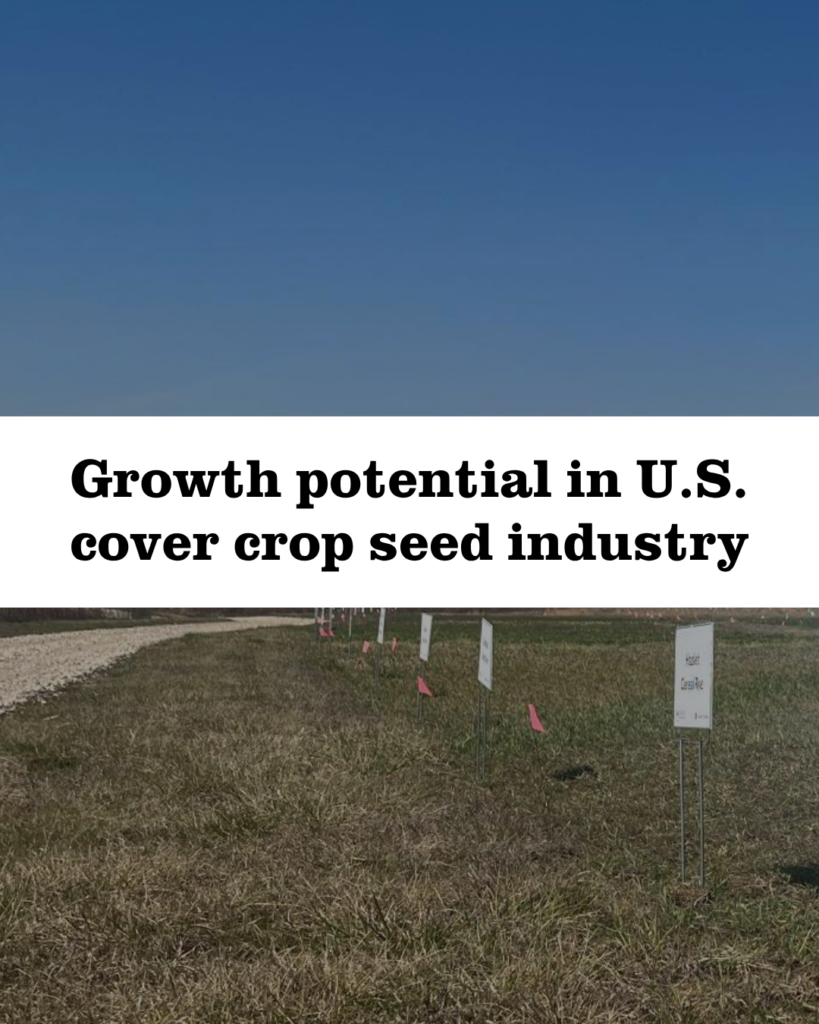
Cover crop adoption has risen significantly in the last ten years. In 2017, the USDA Census of Agriculture documented 15.4 million acres of cover crops grown on over 150,000 U.S. farms. Based on adoption trends reported in the SARE/CTIC National Cover Crop Survey, U.S. cover crop acreage likely reached about 21 million acres last fall. However, this steady growth in acreage has put pressures on U.S. seed supplies of cover crops. With more investments supporting adoption of cover crops in the U.S. than ever, seed company leaders are concerned that there is insufficient seed supply for further growth, not to mention inadequate variety options for producers across the country.
Advancing cover crops
To confront this challenge, MU’s Center for Regenerative Agriculture launched a National Cover Crop Variety Improvement and Seed Production Program, funded through a $10 million United States Department of Agriculture (USDA) Sustainable Agricultural Systems (SAS) award. Over the course of five years, this multi-partner, interdisciplinary project will improve cover crop varieties for thousands of American farmers using cover crops as a conservation practice on millions of acres of American soil. Through participatory research with current and prospective cover crop seed producers, we also seek to provide new income opportunities for small and mid-sized farmers who will be trained to grow cover crop seed.
This nationally coordinated effort will catalyze more rapid and effective progress in meeting demand for regionally adapted, high quality cover crop seed. Overall, we aim to expand use of cover crops to support soil and conservation on U.S. working lands.
Project objective
This multi-organization, interdisciplinary project seeks to advance a United States national cover crop seed variety program that meets the diverse needs of different producers across the country.
Project committees
The project is comprised of the following eight different committees focused on different, though integrated objectives:
- Industry & Economics – Investigate and address barriers to growth in the cover crop seed industry.
- Social Science – Work with small and mid-sized farmers to develop new areas of cover crop seed production contributing to the sustainability of regional bioeconomies.
- Breeding – Accelerate cover crop germplasm improvements for establishment vigor, winter-hardiness, biomass, allelopathy, disease resistance, seed yield, and other traits.
- Variety Testing – Establish a National Cover Crop Variety Testing Program to determine optimal regional adaptation of improved varieties.
- Roots & Soils – Research cover crop germplasm differences in root growth.
- Grazing & Forage – Research cover crop germplasm differences in forage and grazing quality.
- Education & Curriculum – Create cover crop curriculum material and engage with cover crop seed industry representatives for participation in classroom discussions.
- Extension & Outreach – Provide extension and outreach programs that catalyze adoption of improved cover crop varieties and support expansion of cover crop seed production.
Project team
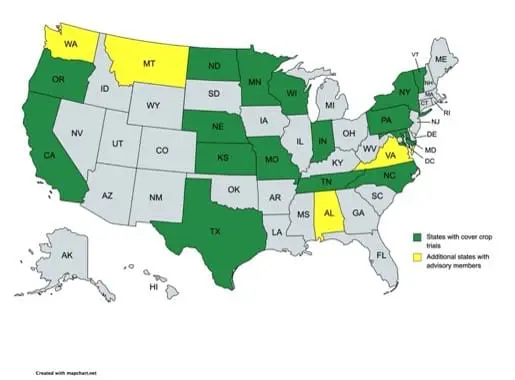
This project is led by the Center for Regenerative Agriculture at the University of Missouri, in collaboration with 60 scientists, cover crop experts, seed industry experts, and producers across multiple universities, USDA facilities, seed companies and farms across the country (see map below). The number of collaborating personal and institutions is expected to increase over time.
Reports & Updates
Thanks to our funder!
This is a national collaborative project supported by the USDA National Institute of Food and Agriculture (NIFA) Sustainable Agricultural Systems (SAS ) Coordinated Agricultural Project (CAP), Grant No. 2023-68012-38993. Visit the NIFA USDA Website.