
Beneficial Effects
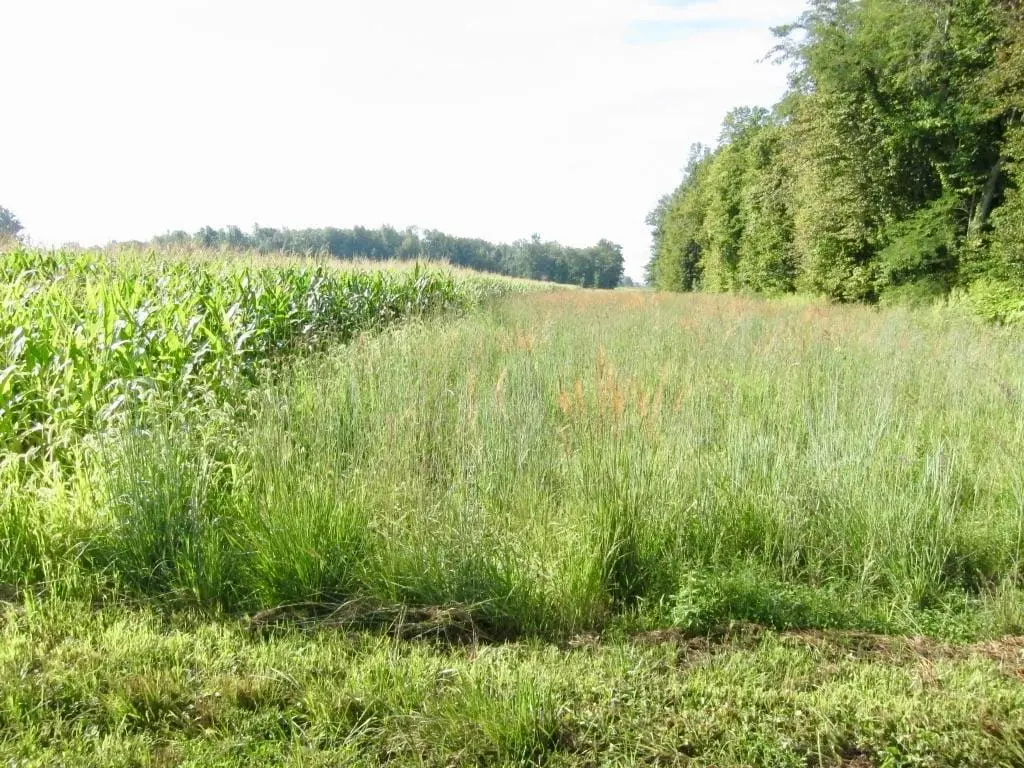
Farms can benefit from adding conservation buffers to crop fields. Conservation buffers are narrow plantings of perennial plants that are primarily used to reduce water runoff from fields, including loss of pesticides and fertilizers. They can also help provide habitat for pollinators and other beneficial insects as well as wildlife. Most often, conservation buffers of perennial grasses are planted around the edge of the field, particularly in downslope positions; woody plants are sometimes used in riparian buffer strips along streams, ponds, or lakes.
Reducing Water Erosion
Sometimes conservation buffers are planted along contours across a field to reduce water erosion. The width of the conservation buffer should be based on the amount of slope in the field and the particular goal for the conservation buffer, but typical conservation buffers are 10 to 30 feet wide.