
Program Description
The Missouri CRCL Project’s cover crop incentive program offers four options to support the use of fall-planted cover crops. This includes two planting incentives and two incentives for cover crop management.
- Rye-Soy
- Diverse Covers
- Late Termination
- Cover Crop Grazing
If you have questions, help is available via email at mocrcl@missouri.edu or phone.
- Felicity Guttmann, Cover Crop Program Specialist: (573) 550-5568
- Bethany Bedeker, Cover Crop Program Manager: (573) 902-8021
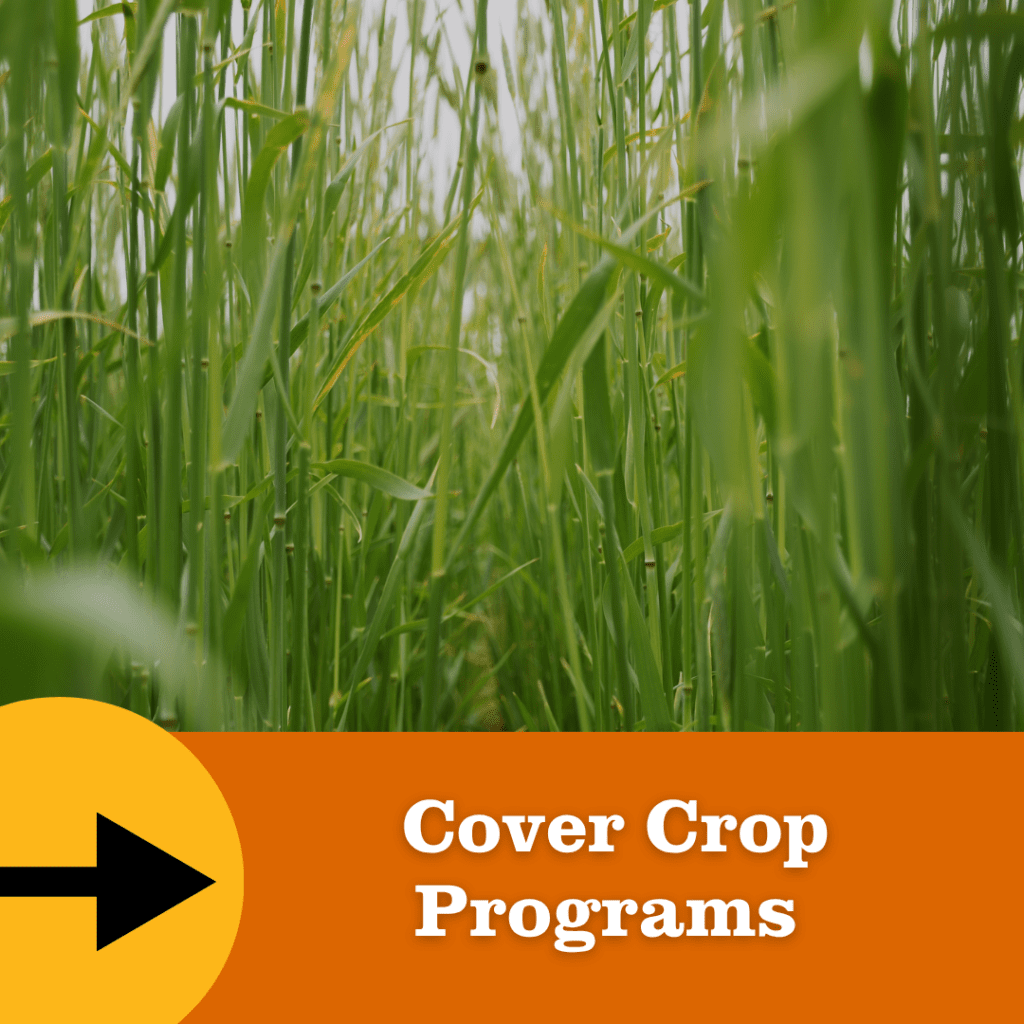
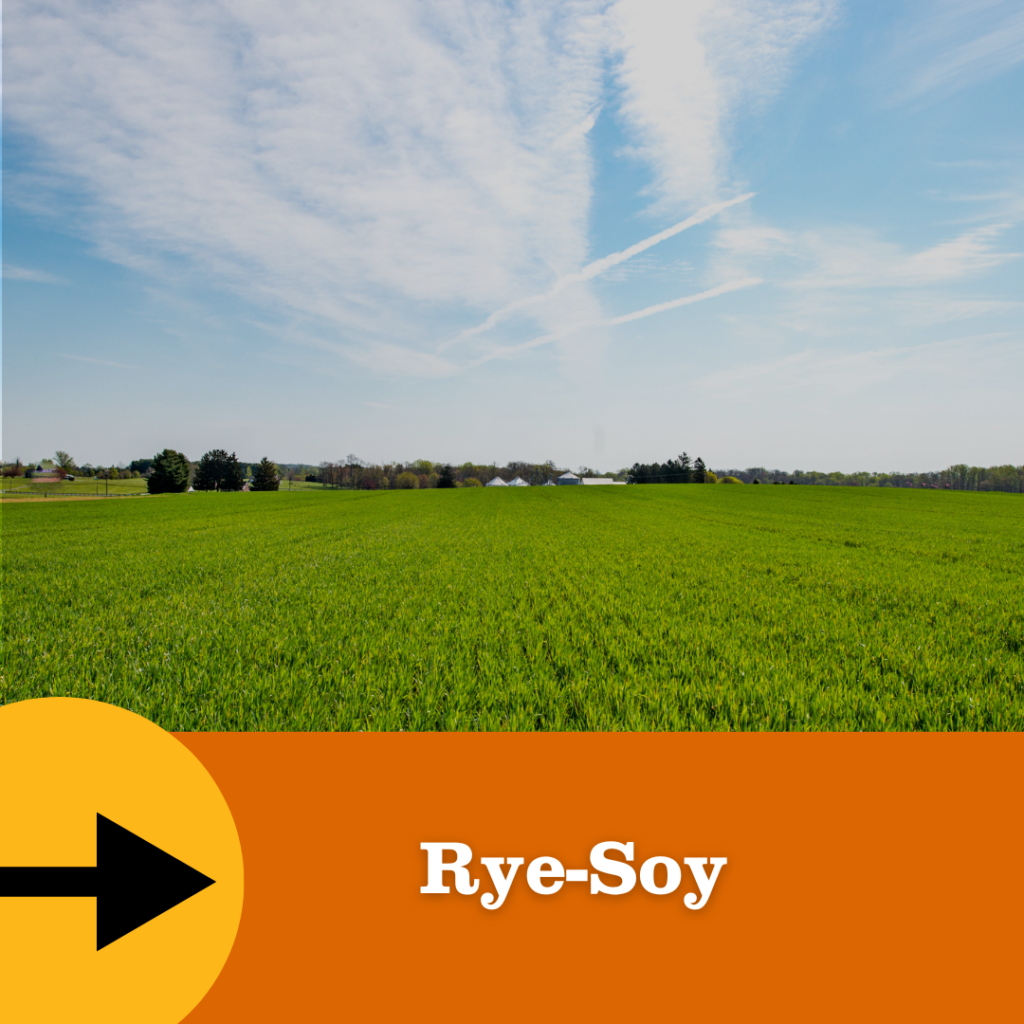
Rye-Soy: $30 per acre
Incentive payment to plant a cereal rye or other grass cover crop in the fall before a soybean crop
Minimum Seeding Rates
When drilled: 30 lbs/ac
When broadcast: 38 lbs/ac
This is a great way to get started with cover crops for those who are new to it. Cereal rye is the most popular cover crop for good reason. It is easy to establish, overwinters reliably, and is simple to terminate. It has a strong track record of working well when planted before soybeans.
It is acceptable to substitute or blend cereal rye with another overwintering cereal cover crop species, such as triticale or wheat. Additional cover crop species may also be added according to your goals, as long as minimum planting rates are upheld. Contact mocrcl@missouri.edu to ask about individual situations.
Planting Date Information
The yellow portions of the map indicate needing to plant before Dec. 15. The black portions of the map indicate needing to plant before Dec. 1. This information is based on Missouri NRCS guidelines. If you need another way to view this map, download the chart below:
Information to Record for Verification
- Planting date
- Cover crop species planted
- Per-acre planting rate of each species
- Planting method (drilled, broadcast, etc.)
- Acres completed
- Document or photo upload
- seed reciept
- as-applied map
- photo of cover crop if neither of the above apply
- Satellite imagery will be used to help verify
Diverse Covers: $40 per acre
Incentive payment to plant a cover crop mix in the fall before a non-legume crop, such as corn, cotton, or sorghum
Diverse Mix Requirements
3 fall-planted species, including 2 non-grass species (legume/brassica), of which one should overwinter.
Mix Suggestions
To mitigate the nitrogen management challenges of planting corn or other non-legume crops after a winter cereal cover crop, the diverse covers program provides suggested mixes with lower C:N ratios.
- For rotations that do not include wheat harvested for grain: wheat, crimson clover, and hairy vetch (or a brassica)
- For rotations that include wheat harvested for grain: oats, crimson clover, and hairy vetch (or a brassica)
You may substitute species or add additional as long as the diverse mix requirements are met. Contact mocrcl@missouri.edu for help with alternative mixes and planting rates.

Minimum Rates for Suggested Mixes
When drilled:
- 13 lbs/ac wheat or oats
- 5 lbs/ac crimson clover
- 6 lbs/ac hairy vetch OR 1.7 lbs/ac rapeseed / other brassica
When broadcast:
- 7 lbs/ac hairy vetch OR 2.3 lbs/ac rapeseed / other brassica
- 16 lbs/ac wheat or oats
- 6 lbs/ac crimson clover
Planting Date Information
The black portions of the map indicate needing to plant before plant before Oct. 31 or Oct. 15. The yellow portions of the map indicate needing to plant before Oct. 20 or Sept. 25. Earlier planting dates apply to mixes that include winter-killed species (oats, turnips, radishes, etc.). This information is based on Missouri NRCS guidelines.
If you need another way to view this map, download the chart below:

Information to Record for Verification
- Planting date
- Cover crop species planted
- Per-acre planting rate of each species
- Planting method (drilled, broadcast, etc.)
- Acres completed
- Document or photo upload
- seed receipt
- as-applied map
- photo of cover crop if neither above apply
- Satellite imagery will be used to help verify
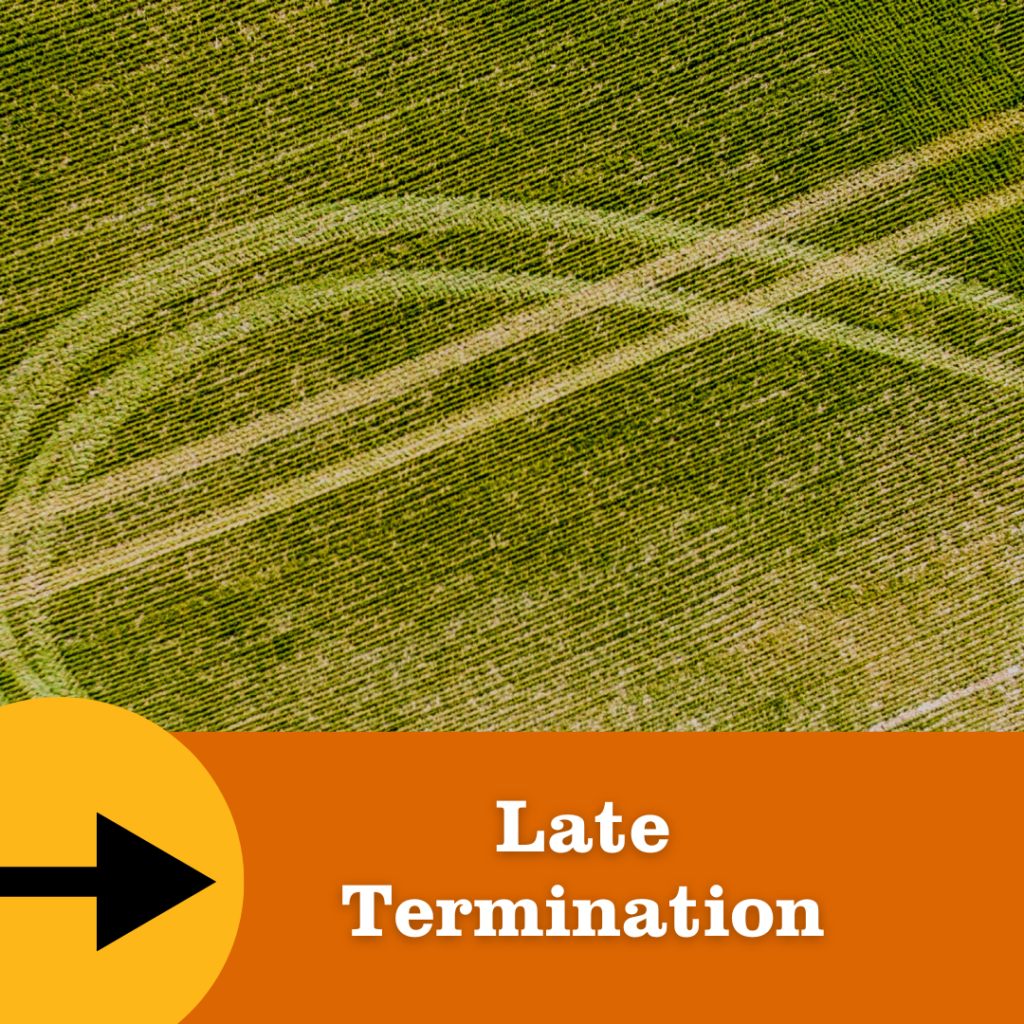
Late Termination: $15 per acre
Allow additional spring growth of cover crops by delaying termination until at least May 1.
This program is designed to encourage continued cover crop growth in the spring, rather than terminating as early as possible. Delayed termination allows cover crops to accumulate more spring biomass, which can improve soil health, weed control, erosion control, and more.
You can enroll in late termination in combination with other MO CRCL cover crop incentives. It can also be combined with external cover crop incentives (as long as termination timing is not a component of that program).
Guidelines
The cover crop must be left growing until at least May 1.
As with all other cover crop incentives, the cover crop cannot be harvested, hayed, baled, or burned (any practice that removes biomass from the field). Due to biomass removal, grazing can not be the method of termination.
We understand that termination decisions will often be influenced weather conditions, which can be hard to predict. If you enroll in late termination but dry conditions prompt you to terminate the cover earlier than planned, there is no penalty for removing it from your enrollment – you just will not receive the late termination incentive payment
Information to Record for Verification
- Termination date
- Termination method
- Total acres terminated after May 1
- As-applied map or receipt, if you have one
- Satellite imagery will be used to help verify late termination date
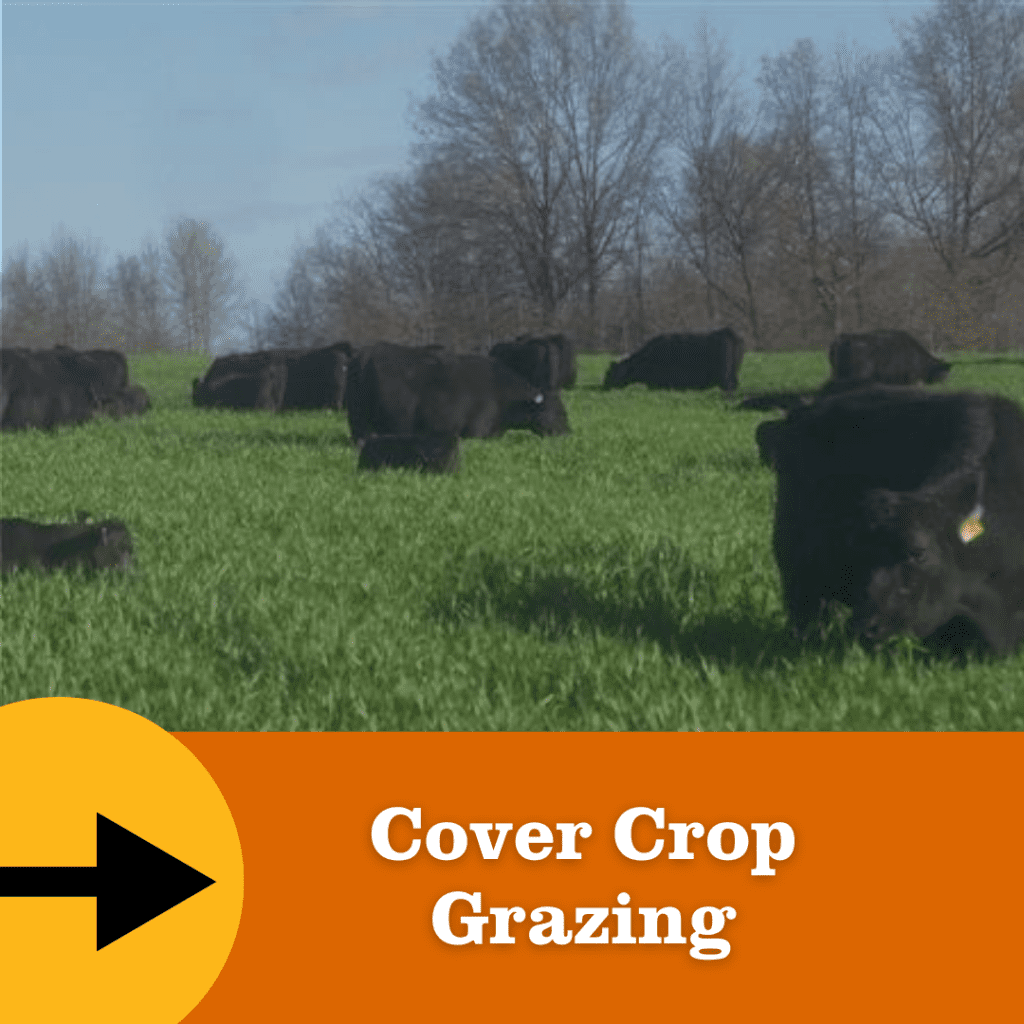
Cover Crop Grazing: $20 per acre
Combine livestock and row crops by allowing livestock to graze cover cropped fields
Producers in Missouri have a unique opportunity to explore the synergistic benefits of adding livestock to their crop ground. Livestock integration can provide significant benefits to soil health while offering a profitable return on investment when managed responsibly.
The guidelines on cover crop grazing are adapted from the Missouri NRCS Cover Crop (340) Standard, which seeks to maintain the soil health and erosion control benefits of the cover crop being grazed.
Grazing can be combined with other MO CRCL cover crop incentives or with an external cover crop incentive (as long as grazing is not a component of that program).
Contact mocrcl@missouri.edu with questions about grazing guidelines.
Guidelines
- The cover crop should be at least 6″ in height before grazing begins.
- Livestock should graze no more than 40% of the available forage.
- Grazing can occur in the fall, spring, or both.
Information above is based on MO NRCS guidelines
Information to Record for Verification
- Date livestock turned in
- Cover crop height when turned in
- Date livestock out
- Cover crop height out
- Number of head
- Field numbers and associated acres they had access to
- Photo upload of livestock in field
- Satellite imagery may be used to help detect grazing events
Program Timeline
- July 10, 2026 – Application Deadline
- Aug. 31, 2026 – Application Decisions Deadline for CRCL Team
- Sept. 30, 2026 – Deadline to Sign Contract
- Jan. 29, 2027 – Additional Farm Information & 2027 Subsidiary Print Deadline
- Jan. 29, 2027 – Planting Verification Deadline
- June 30, 2027 – Late Termination & Grazing Verification Deadline
Eligibility
Cover Crop Program Requirements
- Fields to be enrolled must be located in Missouri, primarily used for annual crop production (corn, soybean, wheat, sorghum, or cotton) and planted to an annual crop either the current or previous year.
- Pasture ground or ground used for annual forages are not eligible for this program.
- The cover crop may NOT be harvested for grain or seed production, hayed, baled, or burned, per NRCS restrictions.
- Fields to be enrolled may NOT be simultaneously enrolled in publicly funded incentives for the same practice on the same acre. For cover crop planting, this practice is Cover Crops (340). Publicly funded programs include NRCS programs (EQIP or CSP), the Missouri SWCD Conservation Cost-Share, and any other USDA Advancing Markets for Producers (AMP) programs.
- Fields currently enrolled in carbon market programs are permissible, but applicants should check with the other program’s rules on enrollment in other incentives.
- Late termination and cover crop grazing typically do not conflict with other programs unless specifically included as a component of that other program.
General CRCL Program Requirements
- Records must be established with the Farm Service Agency (FSA).
- Forms AD-2047 and AD-1026 must be on file with FSA.
- Applicant must be a current citizen of the U.S. or a lawful alien possessing a valid I-551.
- Applicant must have operational control of the acreage to be enrolled, with ability to implement the desired practices and engage in farming activities.
- Payments funded and processed by the University of Missouri are subject to audit and inspection by the USDA Office of Inspector General and other federal assistance program oversight entities
Please Note:
- Enrollment is for a single year.
- A single entity can enroll in up to $10,000 of incentives per enrollment period.
Application Process and Timeline
Submit an application
The Cover Crops Program is no longer accepting applications. The information below is for producers already enrolled in the program.
Have the following items on hand for your application:
- 2026 FSA (Farm Service Agency) Farm maps*
- 2026 FSA Producer Farm Data Report* (to verify association with farms enrolled)
- 2026 FSA Producer Subsidiary Print* (to verify eligibility)
- A list of the field numbers and associated acreage (from your FSA Farm Maps) and the program(s) you would like to enroll each field in. We recommend writing this down before starting the application, as the form does not automatically save your progress. All four cover crop programs are handled in a single application.
*These documents can be obtained in advance by contacting your local USDA Farm Service Agency office. We will ask for a copy of each document to be uploaded with your application. Alternatively, you can authorize us to request them on your behalf during the application.
Application review
Applications will be reviewed by the program team in the order submitted. This program is first come, first served. Applicants will be notified of their status before August 31, 2026.
Notification of acceptance will be sent to the email associated with the FarmRaise account you created to complete the application. You can also check your status by logging in to the online “dashboard.”
Contract
Approved applicants must sign a contract to signify their intent to participate in the program.
The deadline to submit a contract is September 30, 2026.
New participants and returners with payment information updates will need to set up a payment profile with MU. You will receive an email with the subject line, “University of Missouri System – New Vendor Registration” inviting you to register within several days of submitting the contract.
Complete additional requirements
Submit Required Farm Information
This is information that USDA requires us to collect. It can be completed as soon as your application is approved. This questionnaire obtains background information on the farms and fields enrolled, such as tillage practices, past cover crop use, and crops planned for the following year.
Upload 2027 Producer Subsidiary Print
This is an updated version of the document requested at application, used to confirm eligibility requirements. Because the 2027 Federal Fiscal Year begins in October of 2026, we will need a 2027 Subsidiary Print before running any payments. If you authorize us to request FSA documents on your behalf, we will take care of obtaining the updated version for you.
These are the line items verified with this document:
- AD-1026: Certified
- Conservation Compliance: In Compliance
- Foreign Person: Not Applicable
These items should be completed in your FarmRaise dashboard by January 29, 2027.
Practice implementation
Complete the practice according to the program guidelines outlined above. Remember to save your relevant receipts and record dates to submit for verification. Refer to the relevant program guidelines for a list of the information to record.
Practice verification
To verify practice implementation, you will fill out a practice report form and upload with relevant receipts or other documents. As with other required items, this will be submitted in your online FarmRaise dashboard.
- For cover crop planting incentives, this can be done as soon as planting is completed.
- For grazing, verification can be completed when livestock have finished grazing.
- For late termination, this should be completed after termination.
We may use a combination of remote sensing technology and/or field visit spot-checks to help confirm practice implementation. In the case of a field visit, you will be notified in advance.
Planting verification deadline: January 29, 2027
Grazing and late termination verification deadline: June 30, 2027
Payment
Cover crop payments will be issued after the practice has been completed and all of the required information in steps 3-6 has been received and reviewed.
If you are enrolled in both planting and management incentives, you will receive one payment for planting and a later payment for the management incentives.